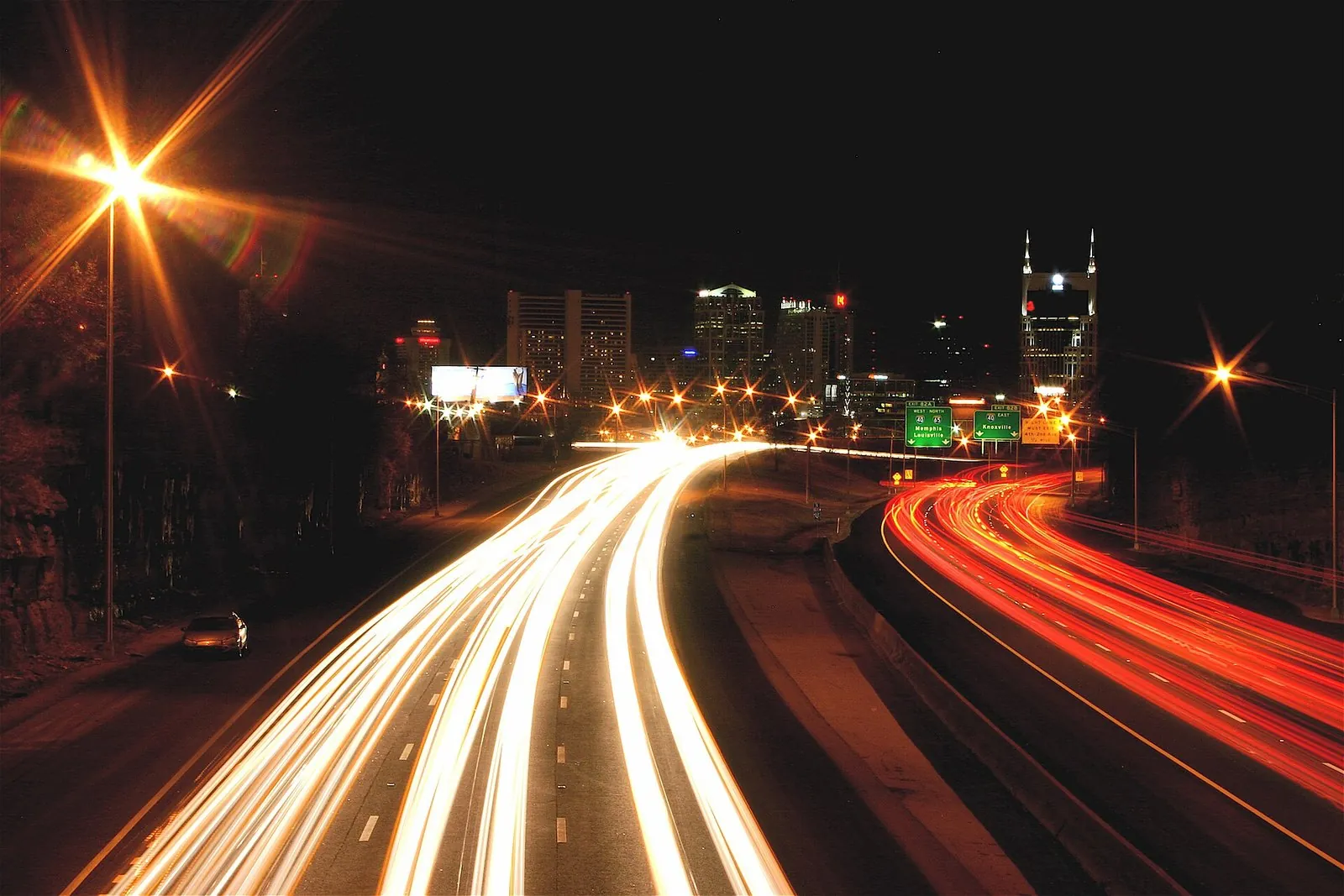
Getting around Nashville is easy downtown and harder everywhere else. The walkable core of Broadway, SoBro and the Gulch covers most first-trip sights on foot, rideshares reach Midtown, East Nashville and the Opry in 10 to 25 minutes, and a $2 WeGo bus runs from the airport. Rent a car only for day trips.
This guide costs and times every way of getting around: walking, rideshare, taxis, WeGo buses and the WeGo Star train, bikes and scooters, driving and parking, and the airport run, with a straight verdict on whether to rent a car. It’s for first-time visitors deciding how to move and where to stay. The caveat: Nashville International Airport is a construction site through December 2027, and one of its parking lots closed in July 2026, so give yourself extra time at the airport.
Last updated October 2, 2026. Prices, rules and details checked September 2026.
The Short Version
| Mode | Cost | Best for | Verdict |
|---|---|---|---|
| Walking | Free | Broadway, SoBro, the Gulch, the Capitol and the pedestrian bridge | The default downtown |
| Uber and Lyft | Varies with demand | Midtown, East Nashville, 12South, Germantown, the Opry | The easiest way to fill the gaps |
| Taxi | $30 flat from the airport to downtown | The airport run, especially for groups of three or four | Good value from BNA |
| WeGo bus | $2 for 2 hours; $4 a day, capped | The airport on a budget; longer trips on main roads | Cheap and underused |
| WeGo Star train | $2 to $5.25 a ride | Commuters from the east | Rarely useful for visitors |
| BCycle e-bikes and scooters | Pay by app | Short hops and the greenways | Fun in mild weather; no scooters on downtown sidewalks |
| Rental car | Plus $58 to $67 a night in downtown valet | Day trips, Opryland, stays outside the core | Rent only for the days you leave town |
| Old Town Trolley | From $41.65 a day | A narrated overview of downtown, Midtown and Music Row | A tour, not transport |
Should You Rent a Car in Nashville?
For most first-time visitors staying downtown for three nights or fewer, no. The sights a first trip is built around, from the Ryman and the Country Music Hall of Fame to the honky-tonks and the pedestrian bridge, sit within about a mile of one another. Rideshares fill the gaps to Midtown, East Nashville and the Opry. Meanwhile, a car downtown is expensive: overnight valet at the hotels that post a rate runs $58 to $67 a night, the Music City Center garage charges $45 overnight, and you’ll pay again to park at most places you drive to.
| Your situation | Rent a car? |
|---|---|
| Staying downtown, in SoBro or the Gulch for 1 to 3 nights | No |
| Staying in Midtown, Germantown or East Nashville | Probably not; rideshares are 10 minutes to Broadway |
| Staying at Gaylord Opryland or near the airport | Maybe; you’ll ride or drive to everything |
| Staying in a rental outside the core | Yes, or budget for rideshares |
| Planning day trips to Franklin, Lynchburg or Mammoth Cave | Yes, for those days only |
| A group of six or more | Compare an XL rideshare with one minivan |
The best pattern for a longer trip is to arrive without a car, spend the downtown days on foot and in rideshares, and rent a car for the day you head out of town. You’ll avoid several nights of valet and the stress of downtown driving, and you’ll still get your day on the Natchez Trace.
Getting From the Airport to Downtown
Nashville International Airport, BNA, is about 8 miles south-east of downtown, a 15 to 20 minute drive without traffic. There are four ways in.
The WeGo Route 18 bus ($2)
WeGo’s Route 18 runs between the airport and downtown for $2, taking 30 to 40 minutes. The first bus leaves the airport at 5:35am and the last at about 11:47pm, and a July 2026 service change set it to run every 30 minutes from 6am to 6pm and every 40 minutes in the evening, on a straighter route. Pay by tapping a contactless card or phone, or use the QuickTicket app; cash works too, with exact change. At $2, it’s the cheapest way into town by a wide margin, and far better than its reputation.
Taxi ($30 flat)
Nashville’s official visitor bureau lists a flat taxi fare of $30 between the airport and downtown, plus $2 for each extra passenger. For three or four people with luggage, that often beats a rideshare, especially at busy times when rideshare prices climb.
Uber and Lyft
Rideshare pickups are at the Ground Transportation Center on Level 1 of Terminal Garage 2, with Lyft in zone A and Uber in zones B and C; the construction hasn’t changed that. Rideshares can’t drop off at the ticketing curb except for accessibility trips, so expect to be dropped at the designated area. Third-party trackers put an UberX from the airport to downtown at roughly $15 to $33 before surge pricing in September 2026, with weekend and late-night surges pushing it higher.
Bus, taxi or rideshare: which is cheapest from the airport?
| Group size | WeGo Route 18 | Taxi (flat fare) | UberX (third-party estimate) |
|---|---|---|---|
| 1 person | $2 | $30 | About $15 to $33 before surge |
| 2 people | $4 | $32 | About $15 to $33 before surge |
| 4 people | $8 | $36 | About $15 to $33 before surge, if the luggage fits |
For a solo traveler with a carry-on, the bus wins easily. For a group of four with suitcases, the flat taxi fare is predictable and often the best value at busy times, when rideshare prices can climb well above the estimate. Tip a taxi or rideshare driver as you would anywhere in the US.
Rental cars
If you’re renting, follow the airport’s signs, and allow extra time: construction of a new rental car facility and parking garage began in January 2026, and Terminal Lot A closed on July 1, 2026 to make room for it.
Airport construction: what it means for you
BNA’s roughly $3 billion New Horizon program includes a Central Core Enhancement Project, rebuilding baggage claim, ticketing, garages and the security hub, that runs from June 1, 2026 to December 2027. Curbside pickup and drop-off carry on as normal, but garage users enter on Level 1 and the Level 5 pedestrian bridge is closed. Leave an extra 20 to 30 minutes for departures, especially on Sunday afternoons and Monday mornings.
Getting Around Nashville on Foot: The Core Is About a Mile Across
Downtown Nashville has about 70 miles of sidewalks, and the core that most visitors care about, from the river to the Gulch and from the Capitol to the Music City Center, is roughly a mile across. These are typical walking times from Lower Broadway, the five honky-tonk blocks between First and Fifth Avenues.
| From Lower Broadway to | On foot |
|---|---|
| Ryman Auditorium | 1 minute |
| Johnny Cash Museum | 2 minutes |
| Country Music Hall of Fame and Museum | 5 minutes |
| Printers Alley | 5 minutes |
| John Seigenthaler Pedestrian Bridge | 5 to 10 minutes |
| Tennessee State Capitol | 10 minutes |
| Frist Art Museum | 10 to 15 minutes |
| The Gulch | 15 to 20 minutes |
| Nashville Farmers’ Market and Germantown | 20 to 25 minutes |
| Nissan Stadium, over the pedestrian bridge | 15 to 20 minutes |
| East Nashville’s Five Points | About 40 minutes |
| Midtown and Vanderbilt | 35 to 40 minutes |
Two things change the math. Nashville is hilly: Broadway climbs from the river to Fifth Avenue, and the Capitol sits on the city’s highest downtown hill. And the summers are hot, with July averaging a high of about 91°F. A 20-minute walk to the Gulch is pleasant in October and punishing at 3pm in July, so plan walking for mornings and evenings in summer.
Uber and Lyft
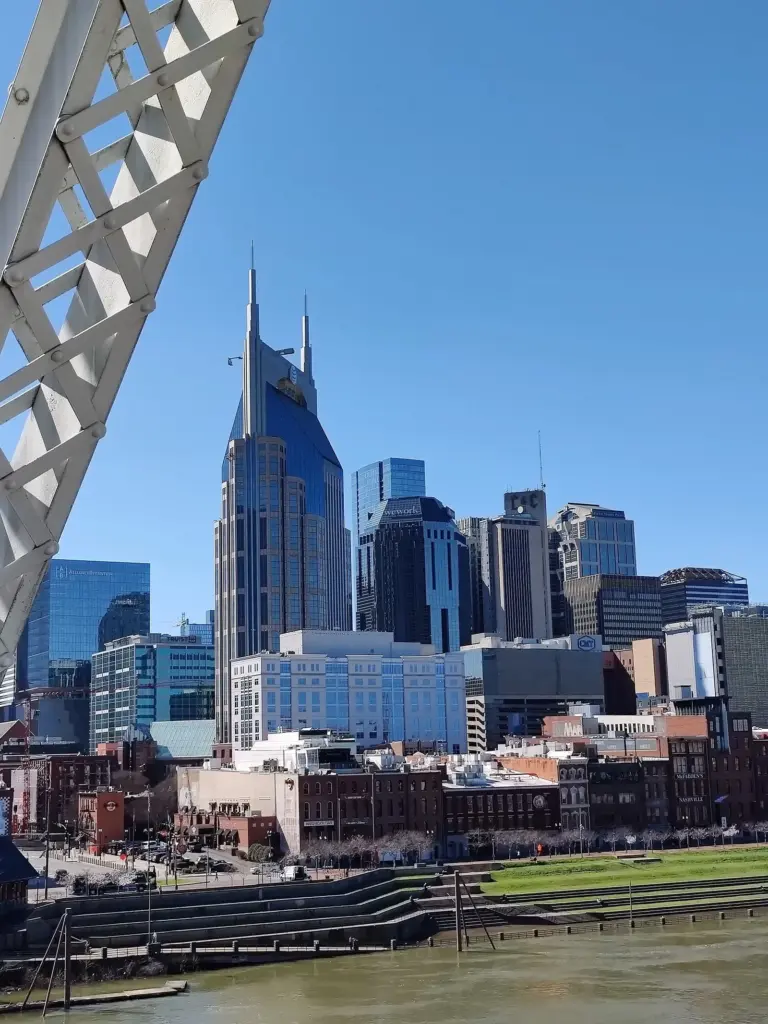
Rideshares are how most visitors get between neighborhoods, and they work well: Midtown, Germantown, 12South and East Nashville are about 10 minutes from Broadway outside rush hour, and the Opry House 15 to 25. Both Uber and Lyft operate across the city, and cars usually arrive within minutes.
Where to get picked up downtown
There are no designated rideshare pickup zones on Broadway. Metro’s only rideshare-zone pilot ran outside TPAC on Deaderick Street for a few weeks in early 2025. At closing time, the curb along the honky-tonk blocks is chaotic, and drivers struggle to stop. Walk a block or two north or south onto a quieter cross street before you request, and confirm the plate and the driver’s name before you get in.
When prices surge
Expect higher prices at bar closing time on Friday and Saturday nights, after concerts at Bridgestone Arena and games at Nissan Stadium, during CMA Fest and on rainy evenings. If the surge is steep, walking 10 minutes away from the crowd or waiting 20 minutes in a bar often brings the price down. For a group of five or six, compare an XL with two standard cars.
Taxis
Licensed taxis operate in Nashville and are most useful at the airport, where the $30 flat fare to downtown is posted by the visitor bureau, with $2 for each extra passenger. In town, rideshares are usually easier to summon, but a hotel doorman can call a cab when rideshare prices surge.
WeGo Buses
WeGo Public Transit runs Nashville’s buses, and they’re cheaper and more useful than most visitors assume. Fares are simple.
| Fare | Adult | Youth (19 and under) and seniors (65+) |
|---|---|---|
| 2 hours unlimited | $2.00 | $1.00 |
| Full day | $4.00 | $2.00 |
| Calendar month | $65.00 | $33.00 |
| Cash single ride | $2.00, exact change, no transfers | Check reduced-fare rules |
Pay by tapping a contactless debit or credit card or a phone wallet, or use the QuickTicket card or app, and the system caps you automatically: you’ll never pay more than $4 a day or $65 a month, however often you ride. American Express isn’t accepted. Children 4 and under ride free with a Discount ID. Buses meet at WeGo Central, the downtown transit center, and Route 18 is the airport express.
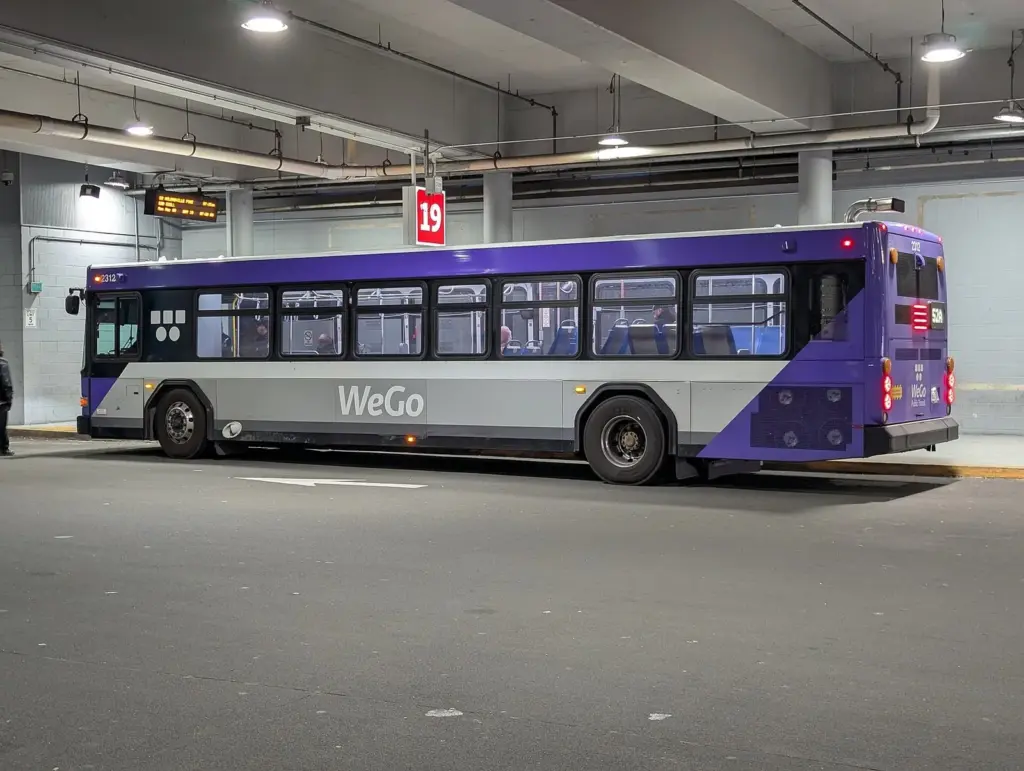
For a visitor, the bus is best for the airport and for longer trips along the main roads that radiate from downtown. Plan trips with WeGo’s own trip planner or a map app, which show live times. Nashville is investing in more service: Davidson County added a half-cent transit surcharge to its sales tax in February 2025, and service changes such as the faster, more frequent Route 18 schedule are rolling out.
The WeGo Star Train
The WeGo Star is Nashville’s only commuter rail line, running east from Riverfront Station at the foot of downtown toward Lebanon. Fares run from $2.00 to $5.25 a ride depending on the station. It’s built for weekday commuters rather than visitors, so check the schedule before you plan around it; for most trips a visitor makes, a rideshare or bus is simpler.
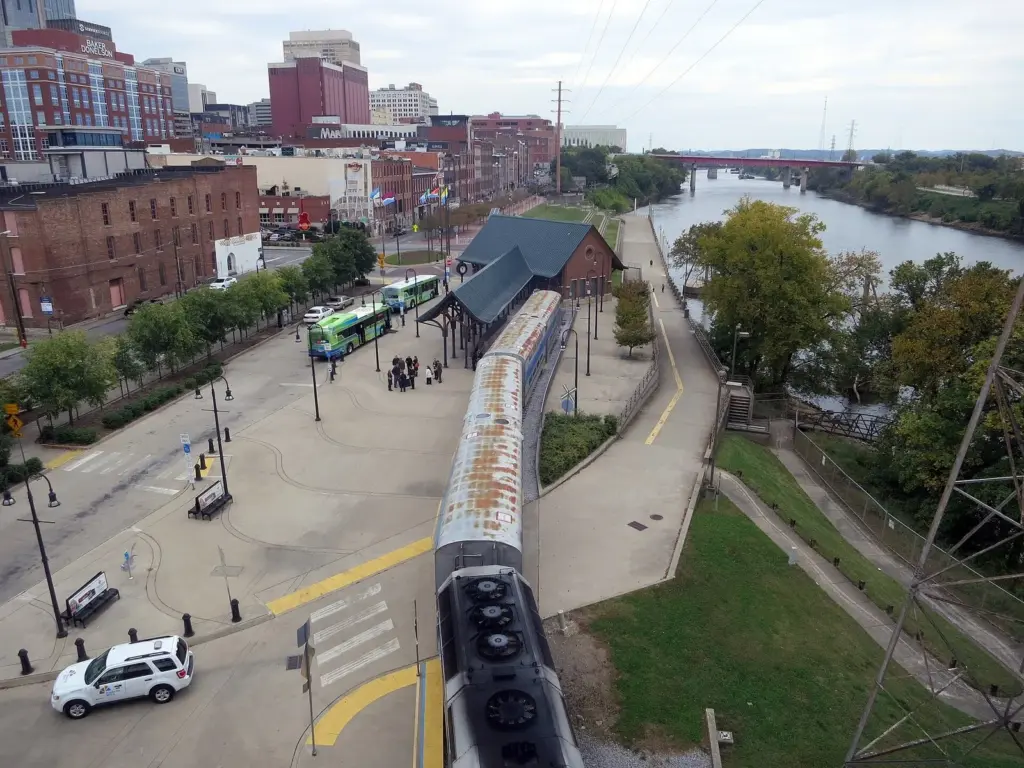
Bikes and Scooters
Nashville’s BCycle bike share rents electric bikes through the BCycle app, with stations around downtown and nearby neighborhoods, and it’s a pleasant way to reach the Gulch, Germantown or the riverfront greenway in mild weather. Bird and Lime run e-scooters, which you rent through their apps. One rule matters: scooters aren’t allowed on sidewalks in the downtown core, so ride in the street or a bike lane and park them out of the way.
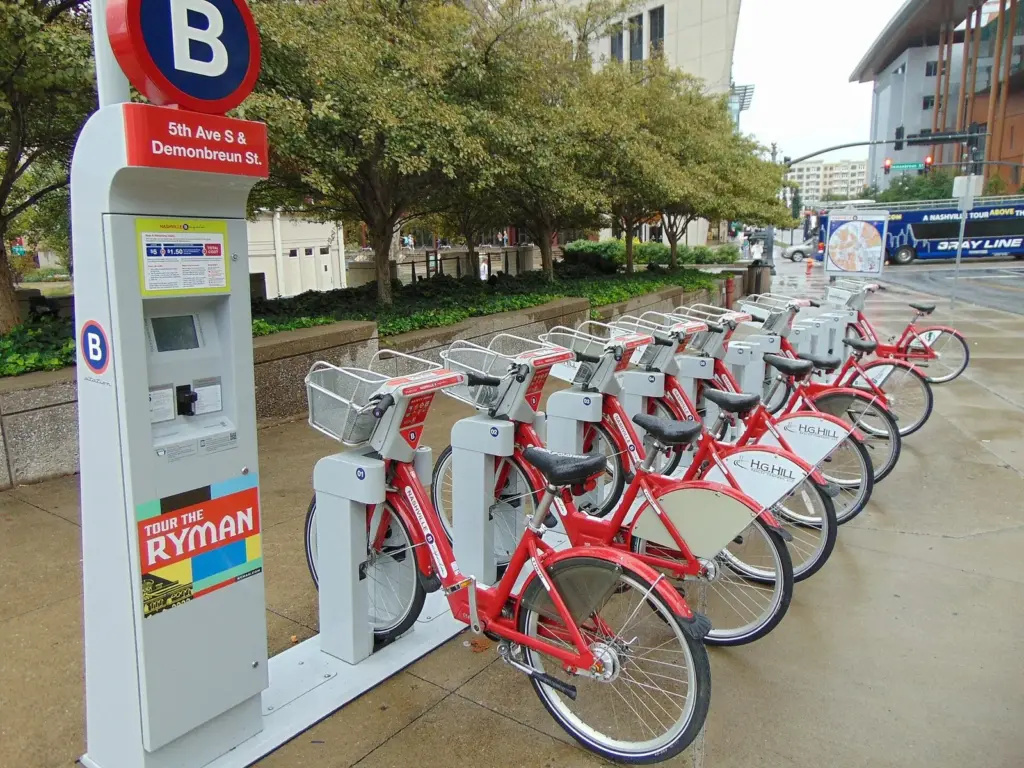
Be realistic about both. Downtown traffic is heavy, the hills are real, and summer heat makes a 20-minute ride hard work. A bike is best on a cool morning along the Cumberland River; a scooter is best for a short hop, not a ride home at 2am after Broadway.
The Trolley and Other Tour Transport
The Old Town Trolley’s 13-stop loop through downtown, the Gulch, Midtown and Music Row, from $41.65 for a day ticket, running 9am to 4pm, is a narrated tour rather than a way to get around, but on a first day without a car it doubles as both. Party buses and pedal taverns are entertainment, not transport: they’re licensed separately by Metro, run set routes and hours, and don’t take you where you need to go. Our guide to Nashville tours worth booking compares them.
Driving and Parking in Nashville
Traffic
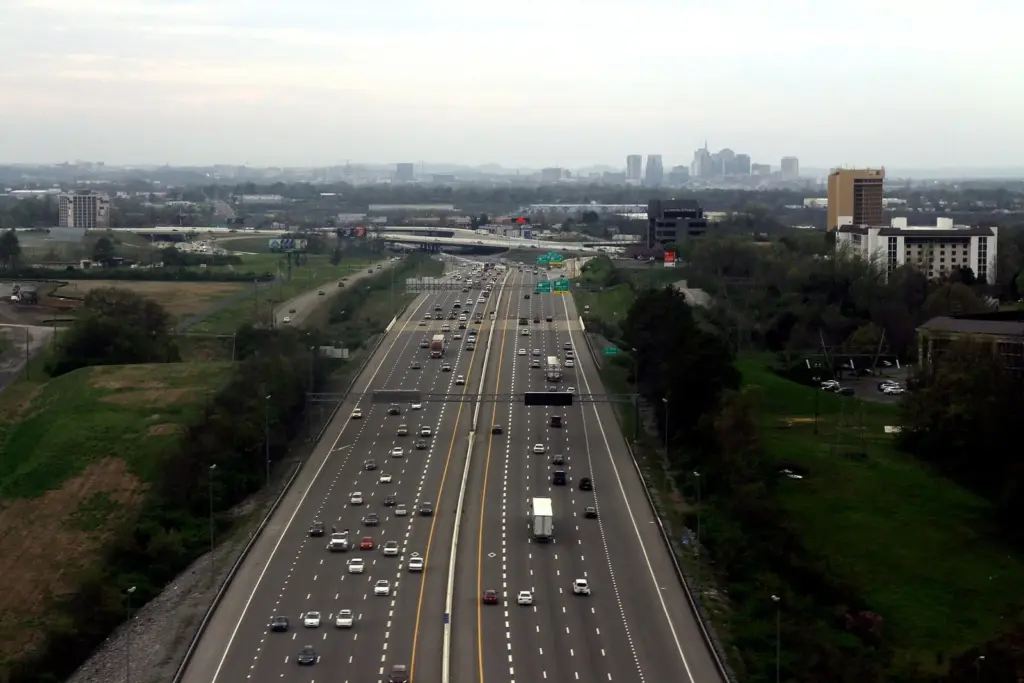
Three interstates, I-40, I-24 and I-65, converge around downtown, and they back up badly on weekday mornings from about 7am to 9am and afternoons from about 4pm to 6:30pm. Add stadium traffic on game days, when the Titans and Tennessee State play at Nissan Stadium, and construction around the East Bank, where the new enclosed stadium is due to open for the 2027 season. If you’re driving out for a day trip, leave before 7:30am or after 9:30am.
Parking downtown
Downtown parking ranges from cheap to painful, and knowing the difference saves real money.
| Where | Posted rate |
|---|---|
| Metro-owned downtown garages | $3 to $20 for an all-day maximum; $10 to $15 for events |
| Music City Center garage | $15 up to 5 hours, $20 up to 9, $25 up to 12, $30 up to 18, $45 overnight; event rates may apply |
| Metro Courthouse and Public Square Garage | Weekday daytime up to $20; $5 after 5pm and on weekends |
| On-street meters | By zone, from $2 an hour in the economy zone up to $6 in the busiest blocks, with time limits |
| Hotel valet | $58 to $67 a night at the hotels that post a rate |
The best tip for visitors driving in for an evening is the Metro Courthouse and Public Square Garage, where evenings and weekends cost $5, a short walk from Printers Alley and Broadway. Event nights change everything: when there’s a show at Bridgestone Arena or a game across the river, private lots near Broadway raise their prices sharply, so arrive early or park farther out and walk. The Library Garage was listed as temporarily closed in September 2026, so don’t plan around it.
Parking at hotels and attractions
At Gaylord Opryland, self-parking is $37 plus tax and valet $50 plus tax a night. Some hotels bundle parking into packages, and a few, such as Mint House by Kasa in Marathon Village, include free garage parking. Rooftop bars sometimes validate: lou/na at the Grand Hyatt gives two hours of free valet, as does Rare Bird, Noelle’s rooftop, for bar guests. Our guide to where to stay in Nashville compares hotel parking rates in more detail.
Getting to the Opry and Opryland
The Grand Ole Opry House, Opry Mills and Gaylord Opryland sit about 10 miles north-east of downtown, a 15 to 25 minute drive, longer at rush hour. A rideshare is the simplest way to an Opry show; book your ride home before the show starts, because hundreds of people leave at once. If you’re staying at the Gaylord, the Opry House is within walking distance.
Getting Around by Neighborhood
| From Broadway to | Best way | Time |
|---|---|---|
| SoBro, Printers Alley, the Capitol | Walk | 5 to 10 minutes |
| The Gulch | Walk, or a short ride | 15 to 20 minutes on foot |
| Germantown | Walk in cool weather, or ride | 20 to 25 minutes on foot; 5 by car |
| East Nashville | Rideshare, or walk over the pedestrian bridge | 10 minutes by car; about 40 on foot |
| Midtown and Vanderbilt | Rideshare or the trolley | About 10 minutes by car |
| 12South | Rideshare | 10 to 15 minutes |
| Opryland | Rideshare or car | 15 to 25 minutes |
| The airport | WeGo Route 18, taxi or rideshare | 15 to 40 minutes |
Getting Home Late
The hardest trip in Nashville is the one from Broadway at 2am. Plan it before you go out. Walk a block or two off Broadway before requesting a ride, expect surge pricing at closing time, and keep your phone charged. If you’re staying downtown, walking back to a hotel at the Capitol end or in SoBro is often faster than waiting for a car. Groups should agree on a meeting point, such as the corner of Fifth and Broadway, before anyone’s phone dies. Never drive after drinking; Tennessee takes impaired driving seriously, and the rideshare will always be cheaper than the alternative.
Getting Around with Kids or Limited Mobility
Downtown’s sidewalks are generally wide, but the hills on Broadway and around the Capitol are steep for strollers and wheelchairs. WeGo buses are low-floor, and children 4 and under ride free with a Discount ID, while youth and seniors pay reduced fares. Rideshare apps let you request larger or accessible vehicles, and rideshares may drop off at the airport’s ticketing curb for accessibility trips. For a family, the simplest plan is a downtown hotel, walking by day and short rides for anything farther.
Day Trips: When You Need a Car
Once you leave the city, there’s almost no transit. Franklin, Lynchburg, Mammoth Cave, the waterfall parks and the Natchez Trace Parkway all need a car, apart from Gray Line’s Franklin Hop and its day tours to Memphis and Dollywood. Rent for the day, leave after rush hour, and remember that Chattanooga and the Smokies are on Eastern time. Our guide to day trips from Nashville covers drive times, permits and prices.
Travel Times Between the Main Hubs
Not every trip starts on Broadway. These are typical drive times between the areas visitors move between most, without rush-hour traffic.
| Between | By car or rideshare |
|---|---|
| The airport and Gaylord Opryland | About 10 minutes |
| The airport and downtown | 15 to 20 minutes |
| Downtown and Opryland | 15 to 25 minutes |
| Downtown and Midtown | About 10 minutes |
| Downtown and East Nashville | About 10 minutes |
| Midtown and 12South | About 10 minutes |
| Downtown and Franklin | 30 to 45 minutes |
| Opryland and East Nashville | About 15 minutes |
If you’re flying in to stay at Gaylord Opryland, the resort says it’s about 10 minutes from the airport, so a rideshare or taxi straight there is quick; the WeGo airport bus doesn’t serve Opryland directly. From Opryland, downtown is a 15 to 25 minute ride, which is why a car can make sense for a Gaylord-based trip, even with the $37 nightly self-parking fee.
Getting Around From Where You’re Staying
Your hotel’s location decides how you’ll move more than anything else. This is what each base means in practice.
| If you’re staying in | You’ll mostly | You’ll need a ride for |
|---|---|---|
| Downtown or the Capitol end | Walk everywhere in the core | Midtown, East Nashville, 12South, the Opry, the airport |
| SoBro | Walk to Broadway, the Hall of Fame and the convention center | The same neighborhoods, plus Germantown in summer |
| The Gulch | Walk to restaurants; 15 to 20 minutes to Broadway | Late nights home from Broadway |
| Midtown or West End | Walk to Vanderbilt, Centennial Park and Division Street | Every trip to Broadway, about 10 minutes |
| Germantown | Walk to the Farmers’ Market and Bicentennial Mall | Broadway at night, East Nashville |
| East Nashville | Walk around Five Points | Downtown, or walk 40 minutes over the bridge |
| Opryland | Walk between the Gaylord, the Opry House and Opry Mills | Everything else, 15 to 25 minutes to downtown |
| The airport area | Drive or ride | Everything, 15 to 20 minutes to downtown |
For the trade-offs in more detail, including parking at each hotel, see our guide to the best areas to stay.
Apps Worth Downloading Before You Arrive
- Uber and Lyft: both run across the city and at the airport’s Ground Transportation Center.
- WeGo’s QuickTicket app: buy and store bus passes, or skip it and tap a contactless card or phone instead.
- A map app with live transit: the easiest way to plan WeGo bus trips and see real-time arrivals.
- BCycle: find and unlock electric bikes at stations around downtown.
- Bird and Lime: for e-scooters, remembering the downtown sidewalk ban.
- The venues’ own apps or sites: the Opry, the Ryman and the big garages post event-day changes there first.
How Nashville’s Transit Is Changing
Nashville has long been one of the largest American cities without rail transit beyond a single commuter line, and its buses have carried a reputation for being slow and infrequent. That is starting to change. Davidson County added a half-cent transit surcharge to its sales tax on February 1, 2025, which is why the county’s sales tax now stands at 9.75 percent, and the money is going into more frequent buses, better stops, sidewalks and signals. For visitors, the most visible early result is the airport bus: WeGo’s July 2026 service change set Route 18 to run every 30 minutes from 6am to 6pm and every 40 minutes in the evening, on a straighter route. Expect more changes through 2027, and check WeGo’s site for the current schedule before you rely on it.
The airport is changing too. BNA’s New Horizon program, a roughly $3 billion expansion, is rebuilding the terminal’s central core through December 2027 and adding a new rental car facility and garage, which is why Terminal Lot A closed in July 2026. And the East Bank, across the river from Broadway, is being rebuilt around the new enclosed stadium, due to open for the 2027 season, with a planned 300-acre district of homes, hotels and streets around it.
Three Car-Free Days, Timed
This is what getting around looks like on a typical trip without a car, with the transport time for each leg.
Day 1: downtown on foot
- 9am: walk from a Capitol-end or SoBro hotel to the Country Music Hall of Fame, 5 to 10 minutes.
- Noon: walk two blocks to Fifth + Broadway for lunch, 5 minutes.
- 1:30pm: walk to the Ryman, 2 minutes, then into the honky-tonks next door.
- 6:30pm: walk to the pedestrian bridge for sunset, 10 minutes.
- Night: walk back to the hotel. Transport cost for the day: nothing.
Day 2: neighborhoods by rideshare
- 9am: walk 20 to 25 minutes to the Farmers’ Market, or ride for 5.
- 11am: walk into Germantown for lunch.
- 2pm: ride 10 minutes to East Nashville’s Five Points.
- 5pm: ride back downtown, about 10 minutes, or walk 40 minutes over the pedestrian bridge.
- Night: three or four short rides, surge permitting.
Day 3: the Opry night
- Morning: ride 10 minutes to Centennial Park and the Parthenon, then 10 to 15 minutes to 12South.
- 5:30pm: ride 15 to 25 minutes to the Opry House for a 7pm show on a Tuesday, Wednesday, Friday or Saturday.
- After the show: request your ride before the crowd does, or wait 20 minutes for prices to settle.
Across three days, that’s a handful of rideshares and a lot of walking, which costs far less than a rental car and three nights of valet, and you never have to look for parking.
Getting Around Nashville on a Budget
A tight budget and Nashville’s transport system get along better than you’d expect. Start with the $2 Route 18 bus from the airport. Stay central, so you can walk to the sights that matter most. Use the WeGo fare cap for longer trips: tap the same card or phone each time and you’ll never pay more than $4 a day. Share rideshares with the rest of your group, and time them away from closing time and big events, when surge pricing bites. If you must drive into downtown, use the Metro Courthouse and Public Square Garage in the evening or on a weekend for $5, rather than a private lot near Broadway. And skip the trolley unless you want the narration; a walk covers most of the same ground for free.
Getting to Games, Concerts and Big Events
Nissan Stadium
The Tennessee Titans play the 2026 season at the existing Nissan Stadium on the East Bank, and Tennessee State University plays home football there too. From downtown, the easiest way in is on foot over the John Seigenthaler Pedestrian Bridge, 15 to 20 minutes from Broadway. After the game, rideshare prices spike and traffic crawls, so walking back across the river is usually faster. The new enclosed stadium next door is due to open for the 2027 season, and construction continues around it until then.
Bridgestone Arena, the Ryman and the Music City Center
Bridgestone Arena sits on Broadway at Fifth Avenue, the Ryman half a block north of Broadway, and the Music City Center in SoBro, so all three are walkable from downtown hotels. For an arena show, eat before and walk; for a convention, a SoBro hotel means you never need a car. Metro-owned garages charge $10 to $15 for event parking, and the Music City Center garage may apply special event rates.
CMA Fest, the Fourth of July and New Year’s Eve
The city’s biggest events close streets downtown and fill every rideshare for miles. CMA Fest runs June 10 to 13, 2027. For all three, stay within walking distance if you can, arrive early, and plan to walk out rather than wait for a car. On the day of the Rock ‘n’ Roll Nashville marathon, April 24 and 25, 2027, road closures affect much of the city, and even the Old Town Trolley doesn’t run.
Getting Around with a Group
Groups have their own logistics. For six people, an XL rideshare or two standard cars usually beat a rented minivan once you add downtown parking. Pick a hotel or rental within walking distance of Broadway so the group can split up and regroup on foot, and agree on a meeting point, such as the corner of Fifth and Broadway, before the night starts. Party buses and pedal taverns are fun, but they aren’t transport: they start from fixed addresses, run set routes and stop by 11pm. Our bachelorette party planning guide covers group transport in detail.
Weather and Getting Around
- Summer heat: July averages a high of about 91°F. Walk and bike in the morning and evening, and use rides in the afternoon.
- Rain: rideshare prices climb when it pours, and the downtown hills get slippery. A WeGo bus or a short wait in a bar are the cheaper options.
- Ice and snow: Nashville averages under five inches of snow a year, but the region has little equipment to clear roads, so even light ice can snarl traffic for a day or two. Stay downtown and walk.
- Storms: March to May is peak severe-weather season. If a tornado warning sounds, stay indoors and follow your hotel’s shelter instructions rather than trying to drive.
Common Mistakes (and the Fix)
- Renting a car for a downtown trip. Fix: go car-free and rent for day trips only.
- Driving to Broadway on a Saturday night. Fix: walk, ride, or park at the Public Square garage for $5.
- Requesting a ride in front of the honky-tonks at closing time. Fix: walk a block or two off Broadway first.
- Riding a scooter on downtown sidewalks. Fix: ride in the street or a bike lane; sidewalks in the core are off-limits.
- Missing the last airport bus. Fix: the last Route 18 leaves the airport at about 11:47pm; after that, take a taxi or rideshare.
- Cutting it close at BNA. Fix: the central core is under construction through December 2027, so add 20 to 30 minutes.
- Paying cash on the bus without change. Fix: tap a card or phone, which also caps your fares.
- Walking to Midtown in July. Fix: it’s 35 to 40 minutes in the heat; take a 10-minute ride instead.
What Getting Around Costs
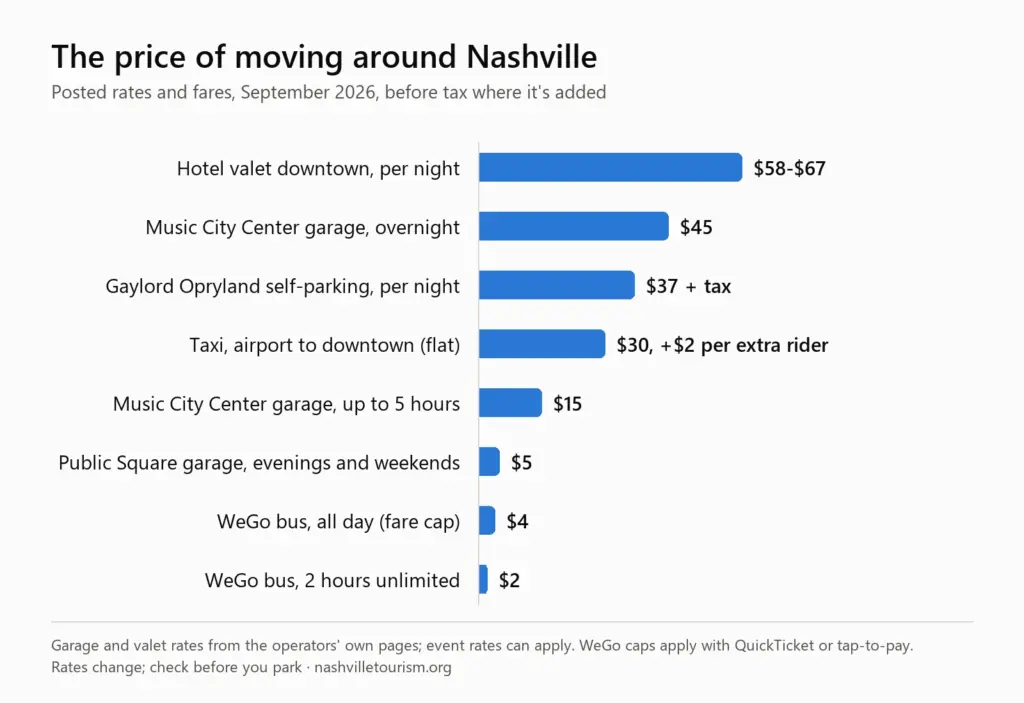
Put the numbers side by side and the case for going car-free downtown is obvious. Three nights of downtown valet cost $174 to $201 before tax, which covers a lot of rideshares and a $30 taxi from the airport. A WeGo day costs $4 at most. The car only pays for itself on the days you leave town, or if you’re staying somewhere the rideshares would add up.
Getting Around Nashville FAQ
Do you need a car in Nashville?
Not if you’re staying downtown, in SoBro or in the Gulch for a short trip. The main sights are within about a mile of one another, rideshares reach Midtown, East Nashville and the Opry in 10 to 25 minutes, and the airport bus costs $2. Rent a car only for day trips, since downtown hotel valet runs $58 to $67 a night.
How do you get from the Nashville airport to downtown?
Take WeGo’s Route 18 bus for $2 (30 to 40 minutes), a taxi for a flat $30 plus $2 per extra passenger, or an Uber or Lyft from the Ground Transportation Center on Level 1 of Terminal Garage 2. The airport is about 8 miles from downtown, a 15 to 20 minute drive without traffic.
Is downtown Nashville walkable?
Yes. Downtown has about 70 miles of sidewalks, and the core from the river to the Gulch is about a mile across. The Ryman is a minute from Broadway, the Country Music Hall of Fame five minutes and the Gulch 15 to 20. The hills and summer heat are the main obstacles, so walk in the mornings and evenings in July.
How much does the bus cost in Nashville?
A WeGo bus ride costs $2 for two hours of unlimited travel, and fares are capped at $4 a day and $65 a month when you tap a contactless card, phone or QuickTicket card. Youth 19 and under and seniors 65 and up pay $1, and children 4 and under ride free with a Discount ID.
Where do Uber and Lyft pick up on Broadway?
There are no designated rideshare pickup zones on Broadway, and the curb is chaotic at closing time. Walk a block or two north or south onto a quieter cross street before requesting a ride, and check the plate before you get in. At the airport, pickups are on Level 1 of Terminal Garage 2.
Where is the cheapest parking in downtown Nashville?
Metro-owned garages charge $3 to $20 for an all-day maximum, and the Metro Courthouse and Public Square Garage charges $5 after 5pm and on weekends, a short walk from Broadway. The Music City Center garage charges $15 for up to five hours. Private lots near Broadway raise prices on event nights.
Can you ride scooters in downtown Nashville?
Yes, Bird and Lime e-scooters operate in Nashville, rented through their apps, but they aren’t allowed on sidewalks in the downtown core. Ride in the street or a bike lane, park out of pedestrians’ way, and skip them late at night. BCycle’s electric bikes are an alternative for longer rides along the riverfront.
Related Nashville Guides
- Where to Stay in Nashville: Best Areas & Hotels: pick a base that keeps you walking
- Nashville Itineraries: Ready-Made Plans for 1-5 Days: plans built around walking and short rides
- Day Trips from Nashville: Best Escapes by Drive Time: the days you’ll want a car
- Things to Do in Nashville: The Complete Guide: the top sights and how far they are from Broadway
- Nashville Honky Tonks and Bars: A Ranked Nightlife Guide: Broadway after dark, and getting home from it
Sources and verification
Details in this guide were checked on September 23, 2026 against the agencies and operators listed below; the guide does not claim first-hand trips, and walking and drive times are typical figures.
- WeGo Public Transit: fare information
- WeGo Public Transit: Route 18 Airport
- Nashville International Airport: parking
- Visit Music City: travel and transportation
- Nashville Downtown Partnership: getting around
- Nashville Downtown Partnership: downtown garages
- Nashville Downtown Partnership: Metro Courthouse and Public Square Garage
- Music City Center: maps and parking
- Metro Nashville: paid parking
- Metro Nashville: rideshare pilot
- Tennessee Department of Revenue: local sales tax rates
- Old Town Trolley Tours Nashville
- Gaylord Opryland Resort: guest information and fees
Photo credits
- Nashville International Airport: photo by Artaxerxes, Wikimedia Commons (CC BY 4.0)
- Downtown from the pedestrian bridge: photo by Andysedgley, Wikimedia Commons (CC BY-SA 4.0)
- WeGo bus at WeGo Central: photo by Mliu92, Wikimedia Commons (CC BY-SA 4.0)
- Commuter train at Riverfront Station: photo by Daniel Lobo, Wikimedia Commons (CC BY 2.0)
- BCycle station, Walk of Fame Park: photo by An Errant Knight, Wikimedia Commons (CC BY-SA 4.0)
- Interstate 40 near BNA: photo by Thank You (21 Millions+) views, Wikimedia Commons (CC BY 2.0)
- Downtown Nashville from the interstate (featured image): photo by Cessna86, Wikimedia Commons (public domain)
Photos are from Wikimedia Commons and have been resized for the web. The chart is our own, drawn from the figures in this guide.