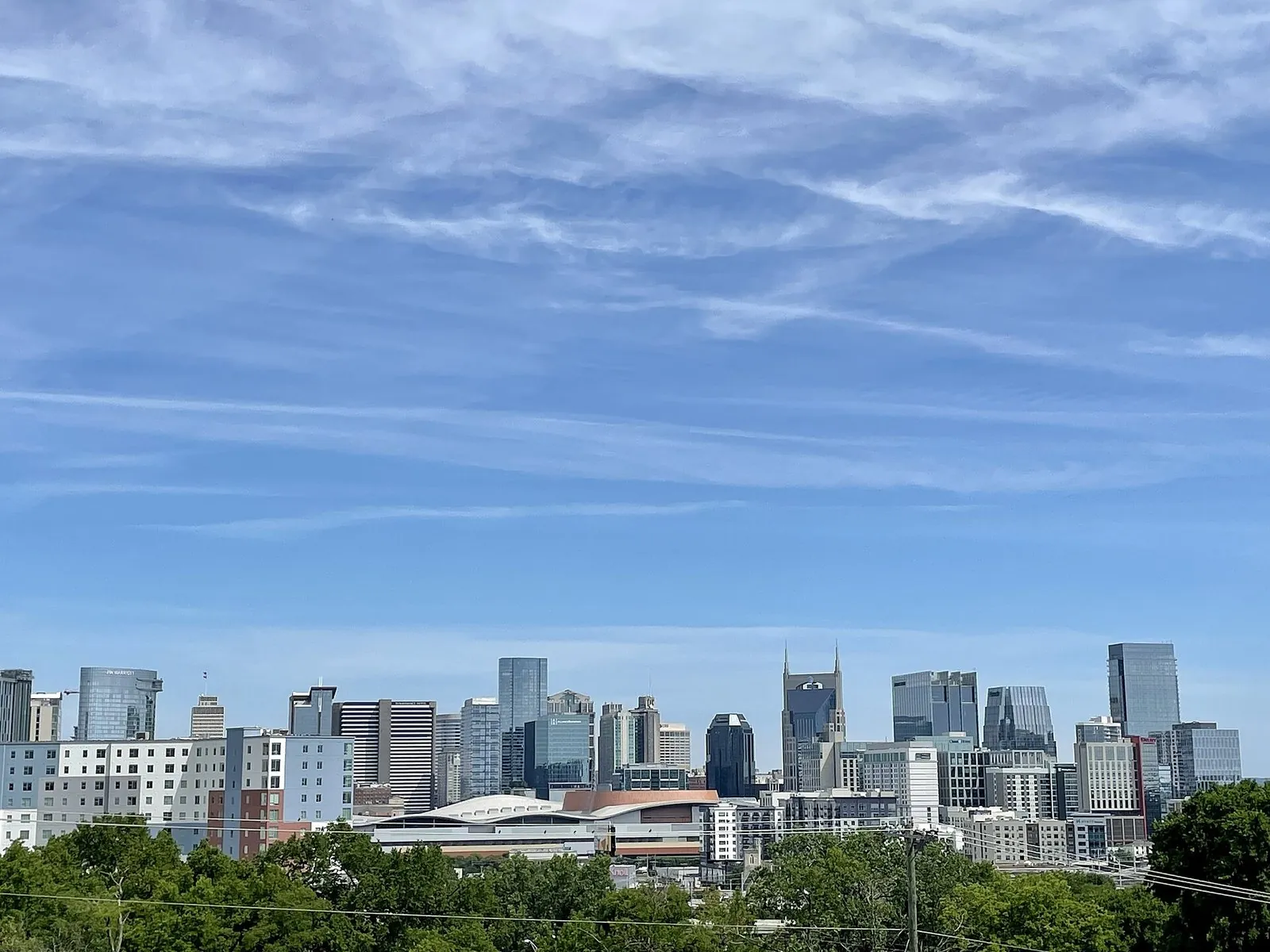
The Nashville neighborhoods most visitors use are Downtown and Lower Broadway, SoBro, the Gulch, Germantown, Midtown, East Nashville and 12 South, all within about 11 minutes of Broadway by car. Beyond them sit Music Row, Hillsboro Village, Wedgewood-Houston, The Nations, Sylvan Park, Jefferson Street, Green Hills, Belle Meade and Music Valley, home of the Opry.
Nashville is not a walk-everywhere city. Downtown, SoBro and the Gulch join up on foot, and a handful of neighborhoods have one walkable main street, but getting between areas means a car, a rideshare or a bus, so where you base yourself shapes the whole trip. One wrinkle worth knowing: Nashville and Davidson County share a single Metro government, yet a few small, separate cities, including Belle Meade and Berry Hill, sit inside the county.
Last updated October 6, 2026. Prices, rules and details checked September 2026.
The Short Version: Pick Your Area
| If your trip is about | Base in | Go out in | Think twice about |
|---|---|---|---|
| A first visit and walking to the music | Downtown or SoBro | Lower Broadway, Printers Alley | Driving in; parking is the city’s priciest |
| Good hotels and restaurants with less chaos | The Gulch | The Gulch, Midtown, 12 South | Expecting live music outside the Station Inn |
| Local bars, bands and food | East Nashville (mostly short-term rentals) | Five Points, Germantown | Walking between East Nashville’s pockets |
| A group or bachelorette weekend | Downtown or Midtown | Broadway, Midtown’s Division Street bars | Party vehicles you haven’t vetted |
| A family trip | Opryland and Music Valley, or West End | The zoo on Nolensville Pike, Centennial Park | Downtown hotels facing Broadway |
| Food above everything | Germantown or the Gulch | Germantown, East Nashville, Nolensville Pike | Eating only on Broadway |
| Quiet and leafy | West End, Sylvan Park, near Belle Meade | Hillsboro Village, 12 South | Needing a car for nearly everything |
| The Opry and Gaylord | Music Valley | The Opry House, Opry Mills | Nights downtown without a rideshare budget |
For specific hotels in each area, with real parking costs, see where to stay in Nashville; for restaurant picks neighborhood by neighborhood, see the best restaurants in Nashville.
How Nashville’s Neighborhoods Fit Together
Start with the river. The Cumberland curves past downtown’s eastern edge, and Lower Broadway runs from the riverbank west to about Fifth Avenue. Keep following Broadway west and it becomes West End Avenue past Vanderbilt and then Harding Pike out toward Belle Meade: that one road is the city’s spine, and Midtown, West End and Belle Meade all hang off it.
Three interstates, I-40, I-65 and I-24, wrap downtown in a tight loop, and the closest neighborhoods sit just outside it: the Gulch to the southwest, SoBro to the south, Germantown to the north and East Nashville across the river. Heading south, 8th Avenue South and 12th Avenue South run down to Melrose and 12 South, while 21st Avenue South passes Vanderbilt and Hillsboro Village on its way to Green Hills. Charlotte Avenue runs west from the Capitol toward Marathon Village, The Nations and Sylvan Park, and Jefferson Street runs west from Germantown through North Nashville. Music Valley and the Opry sit in a bend of the river northeast of downtown, and the airport is out to the east.
Getting Between Neighborhoods
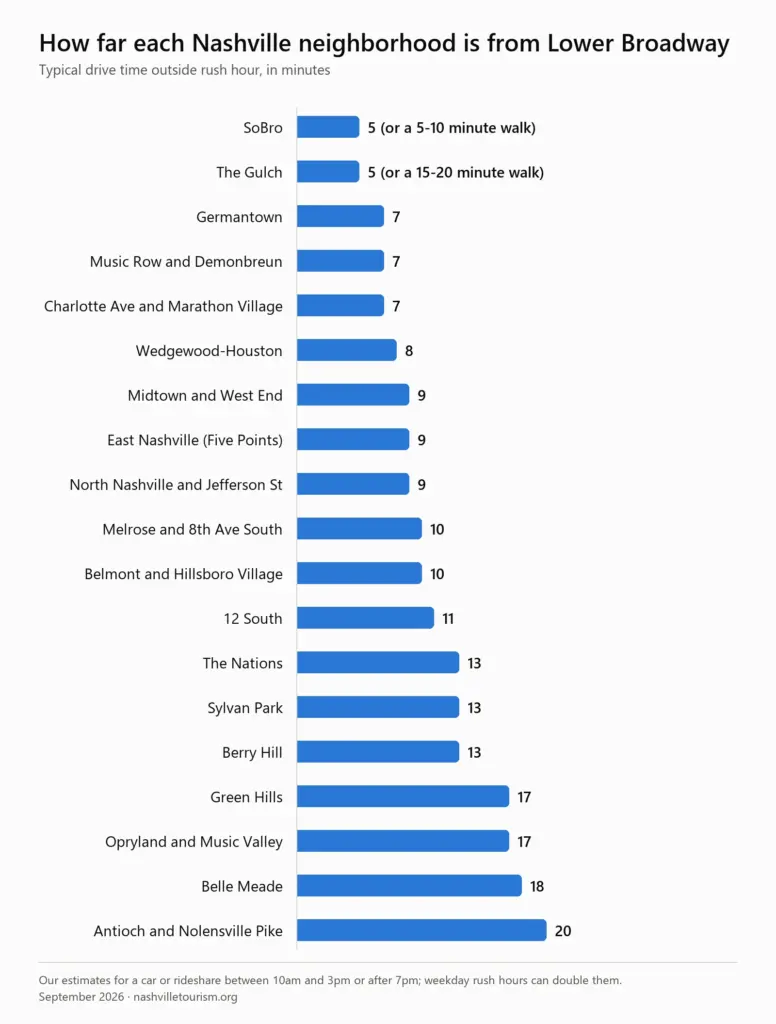
Here are typical off-peak drive or rideshare times between the areas visitors use most, in minutes. They’re our estimates; add 15 to 30 minutes on weekday mornings and from about 4pm to 6:30pm, and more on Titans game days and big concert nights.
| From / to | Lower Broadway | The Gulch | Midtown | 12 South | East Nashville | Germantown | Music Valley |
|---|---|---|---|---|---|---|---|
| Lower Broadway | – | 5 | 9 | 11 | 9 | 7 | 17 |
| The Gulch | 5 | – | 5 | 9 | 12 | 8 | 20 |
| Midtown | 9 | 5 | – | 9 | 15 | 10 | 22 |
| 12 South | 11 | 9 | 9 | – | 15 | 13 | 22 |
| East Nashville | 9 | 12 | 15 | 15 | – | 10 | 15 |
| Germantown | 7 | 8 | 10 | 13 | 10 | – | 17 |
| Music Valley | 17 | 20 | 22 | 22 | 15 | 17 | – |
| Airport (BNA) | 15 | 17 | 20 | 17 | 17 | 18 | 12 |
Rideshares are the default way to hop between areas. WeGo buses mostly run in and out of WeGo Central downtown rather than across town, so a bus from 12 South to East Nashville means a transfer; fares are $2 for two hours or $4 for a day. Parking is easy and often free outside downtown and the Gulch, and expensive inside them.
Downtown’s Core Neighborhoods
Four districts form the walkable middle of the city. The Nashville Downtown Partnership splits downtown into a dozen smaller pieces, from Capitol View to Pie Town, but for a visitor these four are the ones that matter.
1. Downtown and Lower Broadway
Downtown runs from the Cumberland River up to the State Capitol, and its Historic Core, from Broadway north to Dr. Martin Luther King Jr. Boulevard, holds the Ryman Auditorium, the Arcade and Printers Alley. Lower Broadway is the stretch of honky tonks between the river and Fifth Avenue: multi-floor bars with live bands on every level from late morning into the early hours, no cover at most, and a 21-and-up rule after 6pm at many of them, Robert’s Western World and Tootsie’s included. On a Saturday night it’s the busiest few blocks in Tennessee, and it’s where every first-time visitor ends up at least once.
Two blocks north of Broadway, Printers Alley runs between Third and Fourth Avenues North from Union Street to Church Street, a narrow lane of old print-shop buildings that turns into its own small nightlife district after dark: Skull’s Rainbow Room, open since 1948, has jazz nightly and burlesque late on weekends, and Bourbon Street Blues and Boogie Bar books blues seven nights a week. Nearby, the Arcade, a covered two-level shopping passage from the early 1900s, is a good lunch cut-through between Fourth and Fifth Avenues.
Who it suits: first-timers, music-first trips and groups who want to walk to everything. Who it doesn’t: light sleepers, families after dark and anyone driving, since parking here costs the most in the city. Our guide to Nashville’s honky tonks ranks the bars one by one.
2. SoBro
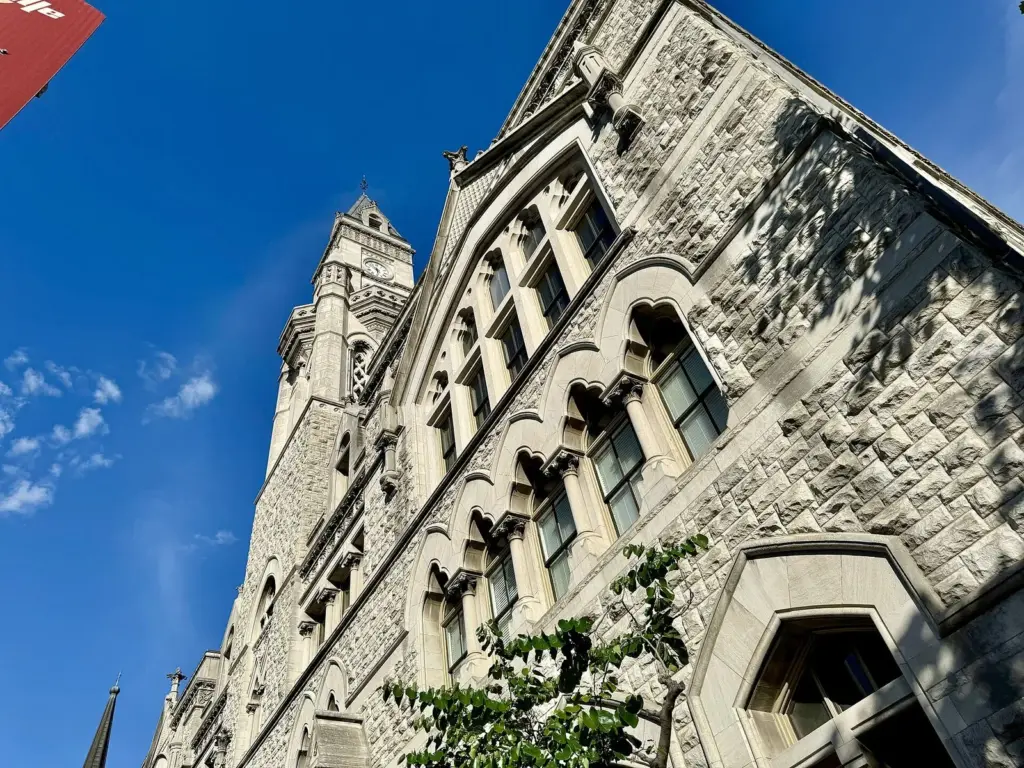
SoBro, short for South of Broadway, is downtown’s convention and museum district. The Music City Center, Walk of Fame Park, the Country Music Hall of Fame and Goo Goo Chocolate Co. all sit here, along with the Schermerhorn Symphony Center and the Johnny Cash Museum on Third Avenue South. It’s also where most of downtown’s newer hotels went up, from full-service towers to apartment-style stays such as Bode and Placemakr that suit groups. Along the river, the South Bank area holds Riverfront Park and Ascend Amphitheater.
Who it suits: first-timers who want Broadway within a five-to-ten-minute walk and a slightly calmer block to sleep on, plus convention-goers. The catch: it’s still downtown, with downtown prices and event-night traffic around the arena and the convention center.
3. The Gulch
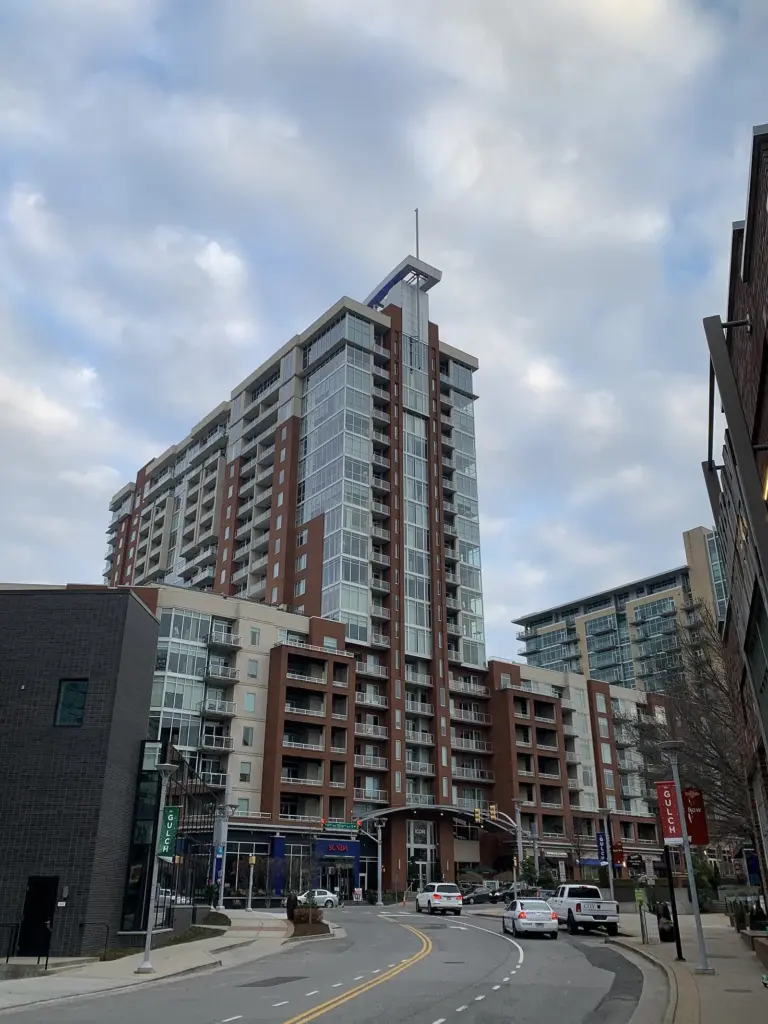
The Gulch is a 91-acre former railyard between downtown’s Historic Core and Midtown that has become the city’s glossiest new neighborhood, with about 9,000 residents, high-rise condos, boutique hotels and a dense cluster of restaurants; the visitor bureau points to Biscuit Love, Carne Mare and Grace’s Alley. The Station Inn, at 402 12th Avenue South, books bluegrass and roots music nearly every night of the year in a small room that predates everything around it, and the What Lifts You wings mural at 302 11th Avenue South is one of the city’s favorite photo stops. W Nashville added Glowbird, a José Andrés pool bar, to its pool deck in 2026.
Who it suits: couples and groups who want polished hotels, good restaurants and a 15-to-20-minute walk, or a five-minute ride, to Broadway. The catch: it’s expensive, and at night it’s a dining district rather than a music one, the Station Inn aside.
4. Germantown
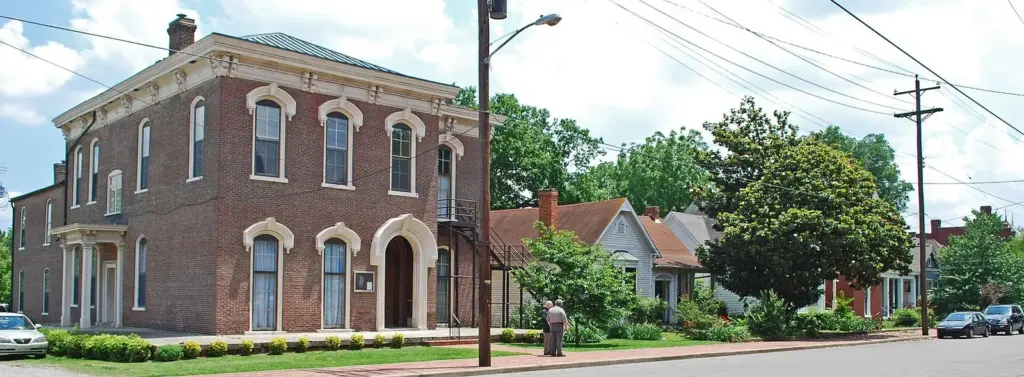
Settled by German immigrants in the 1800s, Germantown is a grid of restored brick Victorian and Italianate houses just north of downtown, and it has become one of the best places to eat in the city. Monell’s has served Southern food family style in an old house here since 1995, the visitor bureau points to The Cupcake Collection and Waldo’s, and the Germantown Inn rents ten suites in an 1865 house. The neighborhood’s edges hold three of the easiest outings in town: the Nashville Farmers’ Market, Bicentennial Capitol Mall with the Tennessee State Museum, and First Horizon Park, where the Triple-A Nashville Sounds play. Brooklyn Bowl adds concerts and bowling.
Who it suits: food-focused trips, couples and anyone who wants a walkable, quieter base about seven minutes from Broadway. The catch: hotel choice is thin, so most visitors come for dinner rather than to stay.
Midtown, Music Row and the South Side
West and south of downtown, six neighborhoods sit within about 10 minutes of Broadway: the university districts, the music business and the small commercial strips locals actually use.
5. Midtown and West End
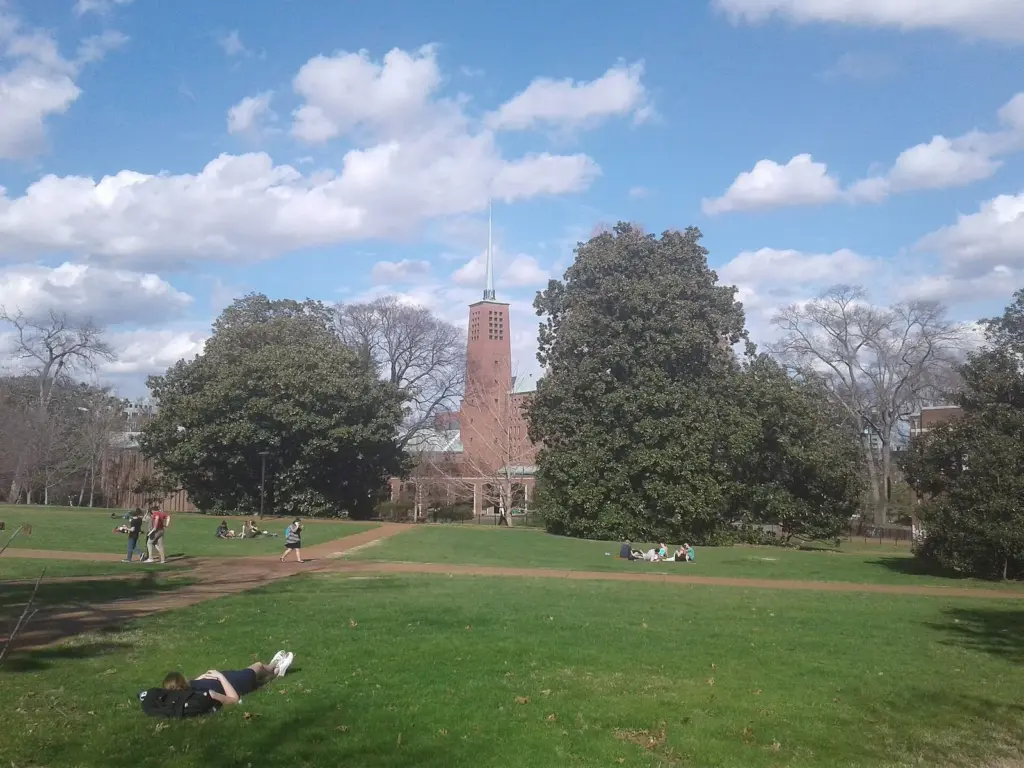
Midtown is the stretch of Broadway and West End Avenue between downtown and Vanderbilt University, and it’s two neighborhoods in one. By day it’s hospitals, offices and campus, with Centennial Park and the Parthenon at its western edge. By night the blocks around Division Street and Demonbreun become the city’s second bar district, younger and cheaper than Broadway, with spots like Red Door Saloon and the karaoke rooms at Happy Does Nashville. Rooftops are the other draw: White Limozeen, the pink Dolly-themed rooftop on the Graduate hotel, and Eddie Ate Dynamite at Hotel Fraye. Elliston Place, a block off West End, keeps the Exit/In, a rock club open since 1971.
Who it suits: groups and bachelorette parties who want nightlife without Broadway’s prices, and anyone visiting Vanderbilt. The catch: weekend nights are loud, and the honky tonks are a 25-to-30-minute walk or a short ride away.
6. Music Row and Demonbreun
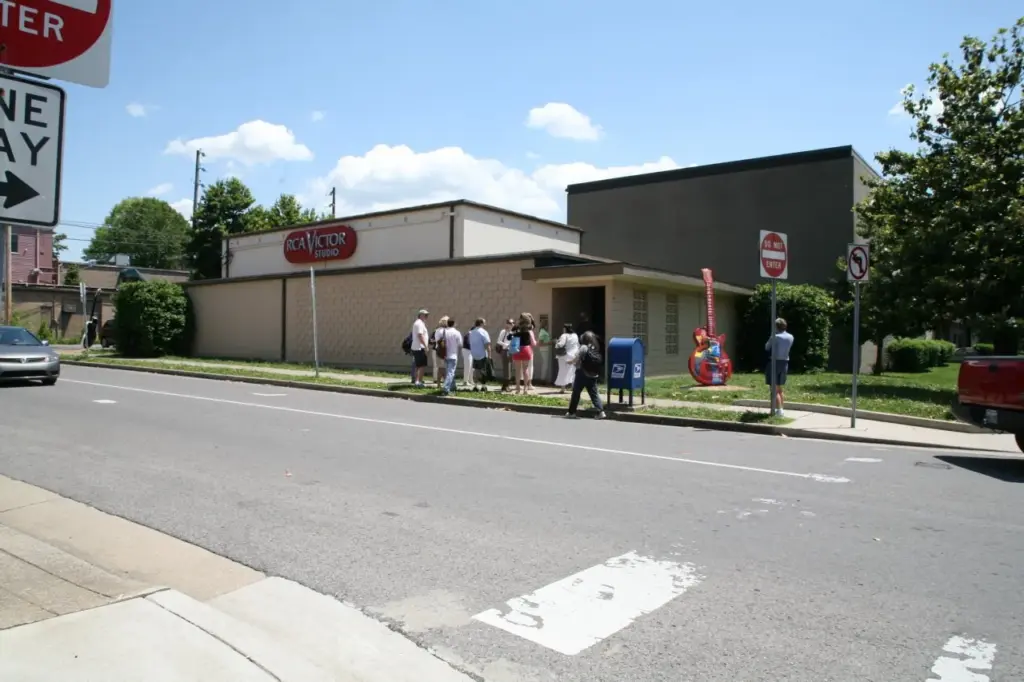
Music Row is the business end of Nashville’s music industry: a few blocks of 16th and 17th Avenues South, officially Music Square East and West, lined with label offices, publishers and studios, many in converted houses. There’s little to go inside. RCA Studio B, where Elvis Presley and Dolly Parton recorded, opens only on the tour sold by the Country Music Hall of Fame, and the rest is offices at work. The roundabout at the Row’s north end holds Musica, a large bronze sculpture. Demonbreun Street, running from the Row toward downtown, has bars and restaurants, and the visitor bureau groups Third Man Records, Jack White’s label and record store, and Gruhn Guitars, the vintage guitar dealer, with this area.
Who it suits: music-industry pilgrims and anyone on a trolley tour, which passes through. The catch: towers are replacing some of the old houses, and without the Studio B tour a visit is mostly looking at buildings.
7. Belmont and Hillsboro Village
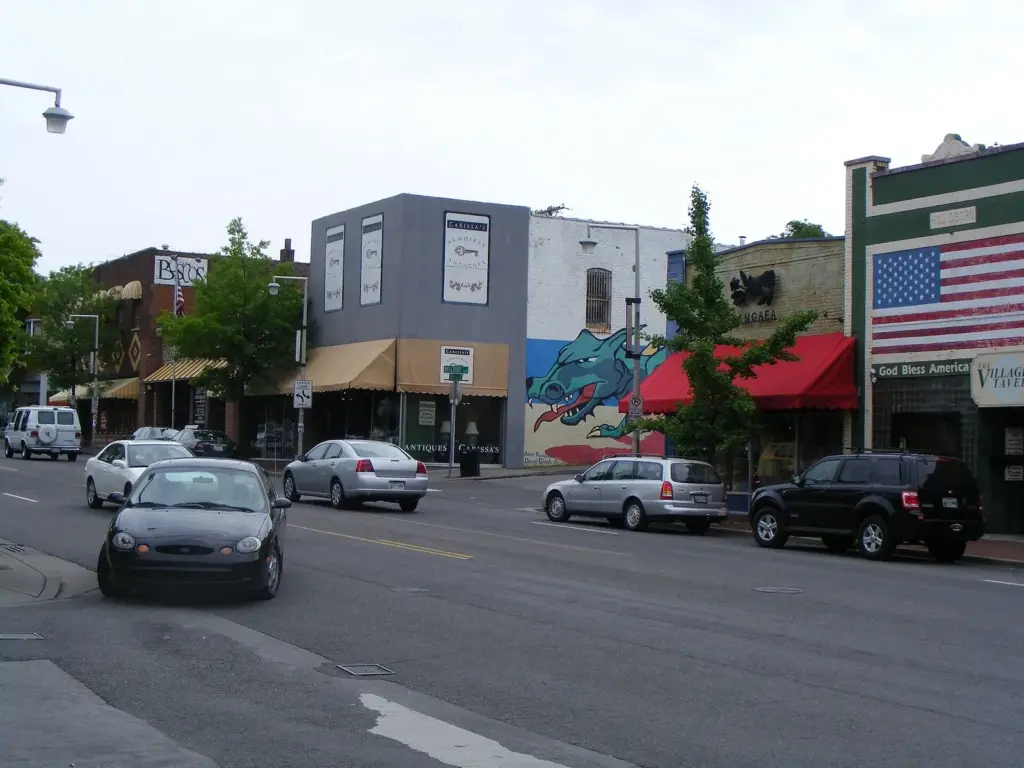
Squeezed between Vanderbilt and Belmont University along 21st Avenue South, Hillsboro Village is a few walkable blocks of bungalows, boutiques and inexpensive restaurants that has fed students for generations. Its landmarks are the Belcourt Theatre at 2102 Belcourt Avenue, a nonprofit art-house cinema in a building that hosted the Grand Ole Opry in the 1930s, and the Pancake Pantry, long known for its breakfast lines. Belmont University’s campus, a short walk east, holds Belmont Mansion, the 1850s villa of Adelicia Acklen, with tours from $18.
Who it suits: visitors who like a college-town feel, film buffs and anyone visiting Vanderbilt or Belmont. The catch: it’s small; two hours covers it, and weekend parking is tight.
8. 12 South
12 South takes its name from 12th Avenue South, and its heart is a walkable stretch of boutiques, cafes, restaurants and bars along that one street, about 11 minutes from Broadway. The visitor bureau calls it one of the city’s trendiest areas and points to Draper James, Reese Witherspoon’s clothing store, as a draw, and Sevier Park, just off the street, adds lawns and shade. Weekend brunch lines and photo crowds come with the territory.
Who it suits: shoppers, brunch lovers and anyone who wants a pretty, walkable street for an afternoon. The catch: it’s a strip rather than a district, parking is scarce, and nights are quieter than in East Nashville or Midtown.
9. Melrose and 8th Avenue South
Eighth Avenue South, running from the edge of downtown past Melrose toward Berry Hill, is Nashville’s antiques row and a useful local strip: the visitor bureau points to its antique stores, budget-friendly restaurants, coffee and Zanies, the city’s main comedy club. It isn’t pretty and doesn’t try to be. This is where locals run errands, hunt for vintage furniture and grab a cheap dinner before a show.
Who it suits: antique and vintage shoppers, comedy fans and travelers who like everyday neighborhoods. The catch: it’s a car-oriented road, so plan specific stops rather than a stroll.
10. Wedgewood-Houston
WeHo, as everyone calls it, is a former industrial area just south of downtown that artists and makers took over first, and the visitor bureau still pitches it as a creative hub of galleries, studios and workshops. The food followed: Bastion, a tasting-menu restaurant, earned a Michelin star in the 2025 American South guide. The neighborhood’s southern edge is the Fairgrounds, home to Geodis Park, where Nashville SC plays, and the Fairgrounds Speedway. Live Nation’s The Truth, a 4,400-capacity music venue here, was announced for a fall 2026 opening, so check whether it’s open for your dates.
Who it suits: gallery-goers, serious food trips and soccer fans. The catch: it’s spread out and still industrial in places, so it rewards a planned visit more than wandering.
Across the River and North of Downtown
East Nashville, across the Cumberland, and the neighborhoods north and west of the Capitol hold a lot of the city’s everyday life, and much of its music history.
11. East Nashville
Across the river from downtown, East Nashville is a big, leafy spread of early-1900s houses and small commercial pockets, and it’s where many of the city’s musicians, cooks and artists live. Five Points, where Woodland Street meets 11th Street, is its center, with bars and restaurants within a few minutes’ walk of each other. The music is the draw: the AMERICANAFEST schedule in September 2026 used the Basement East, the 5 Spot, the East Room, Skinny Dennis, Lipstick Lounge and Vinyl Tap, among others, and the visitor bureau points to Grimey’s, the city’s best-known record store, and the paired bars Rosemary and Beauty Queen. Bolton’s Spicy Chicken & Fish, in a cinderblock building on Main Street, is one of the old-school hot chicken stops.
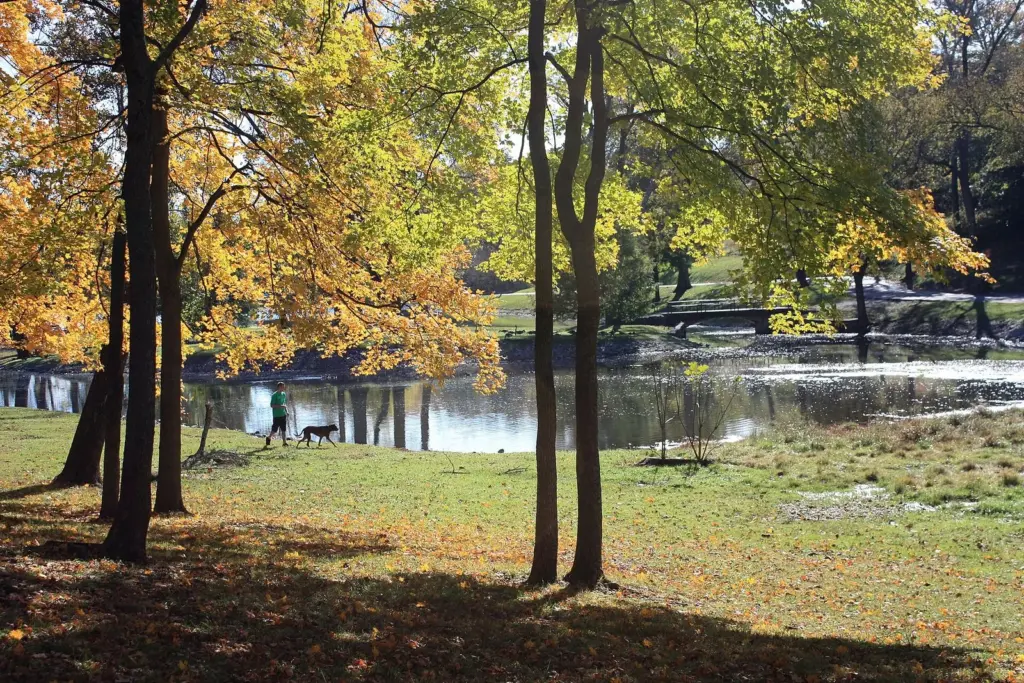
Shelby Park and the Shelby Bottoms Greenway line the neighborhood’s eastern edge along the river, and Tomato Art Fest takes over the streets each August. Who it suits: repeat visitors, music fans who want local bands rather than Broadway cover sets, and groups in short-term rentals. The catch: there are few hotels, and the good spots are spread across several pockets, so you’ll still drive or ride between them.
12. North Nashville and Jefferson Street
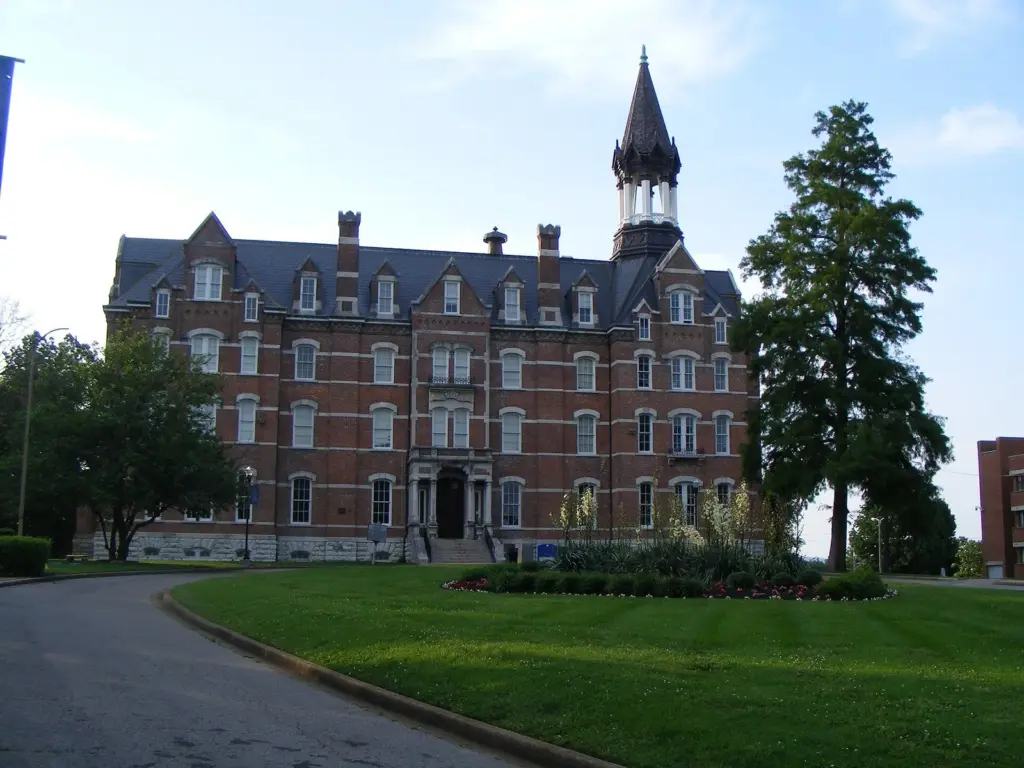
North Nashville is home to three historically Black universities, Fisk, Tennessee State and Meharry Medical College, and to Jefferson Street, which from the 1930s into the 1960s was the center of the city’s R&B and jazz scene. Little Richard, Sam Cooke and Jackie Wilson played its clubs, Jimi Hendrix cut his teeth there, and Etta James recorded her famous live album at the New Era Club. Then Interstate 40 was routed through the neighborhood, displacing more than a thousand Black residents, destroying much of the business district and cutting the community in half.
The Jefferson Street Sound Museum, a nonprofit museum, studio and rehearsal hall, keeps that history on the street itself; check its site for visiting times. Fisk’s campus, with Jubilee Hall and its art galleries, is a short drive from downtown, and the visitor bureau points to the shops, bars and restaurants along Buchanan Street. Two long-running soul-food institutions, Swett’s and Silver Sands Cafe, are here too. Who it suits: history and music travelers, and anyone who wants to understand the city beyond Broadway. The catch: the story is bigger than what’s left standing, so come with a plan or on one of the guided Nashville tours that cover it.
13. Charlotte Avenue and Marathon Village
Charlotte Avenue runs west from the Capitol, and the corridor along it mixes craft beer, coffee, vintage stores and music venues. Its anchor is Marathon Village, the brick complex that housed Marathon Motor Works from 1907 to 1914, the first automobile maker in the South, and has been renovated since the late 1980s into a small maze of shops, distilleries and cafes, among them Poplar Point, H Bar C Ranchwear and Just Love Coffee Cafe. Marathon Music Works, a standing-room venue for about 1,800, books touring bands, and the LeQuire Art Gallery is on the corridor too.
Who it suits: an afternoon of browsing and tasting, or a concert night. The catch: once you’ve walked Marathon Village, the rest of Charlotte is a drive between stops.
The West Side
West of Midtown the city gets greener, calmer and more residential, and three areas are worth knowing.
14. The Nations
The Nations is a formerly industrial neighborhood off 51st Avenue North, about 13 minutes west of Broadway, where old warehouses and mills now hold craft breweries, bars, fast-casual spots, chef-driven restaurants and galleries. Its landmark is a grain silo painted with a giant portrait mural by the Australian artist Guido van Helten, a tribute to the neighborhood’s people and its industrial past. The visitor bureau points to 8th and Roast for coffee and Bringle’s Smoking Oasis for barbecue.
Who it suits: brewery crawls, a relaxed local evening and visitors staying in west-side rentals. The catch: it’s still being built, with new apartment blocks going up between the older spots.
15. Sylvan Park
Next door to The Nations, Sylvan Park is a quiet grid of bungalows whose main street, Murphy Road, is lined with the kind of neighborhood restaurants and bars the visitor bureau describes as having stood the test of time: M.L.Rose for burgers and craft beer, Edley’s Bar-B-Que, Streetcar Taps and Garden, and Sylvan Supply. Murphy Road ends at McCabe Park, with a public golf course and the Richland Creek Greenway for walking or cycling.
Who it suits: visitors with a car who want a calm, local base, and golfers. The catch: there’s no sightseeing to speak of; it’s a place to live like a local for a few days.
16. Belle Meade and West Nashville
Belle Meade is technically its own small city inside Davidson County, a residential enclave of large houses and wide lawns along Belle Meade Boulevard, and one of the wealthiest communities in Tennessee. For visitors, West Nashville means what surrounds it: the Belle Meade Historic Site and Winery, a 19th-century thoroughbred farm where $32 buys a 45-minute mansion tour, the grounds and a tasting; Cheekwood’s gardens and art museum; and the Warner Parks, thousands of acres of wooded trails, where Percy Warner Park hosts the Iroquois Steeplechase each spring (May 8 in 2027).
Who it suits: history, garden and outdoor days, and travelers who want quiet, upscale surroundings. The catch: it’s about 18 minutes from Broadway, and nightlife is close to nonexistent. Our guide to Nashville attractions has hours and prices for Belle Meade, Cheekwood and the other historic houses.
South and Southeast: Berry Hill, Green Hills and Nolensville Pike
South of the university districts, three very different areas are worth a trip for specific reasons: studios, shopping and the best cheap food in the city.
17. Berry Hill
Berry Hill is a tiny separate city surrounded by Nashville, a few minutes south of Melrose, and one of the music business’s quiet secrets: many of its small houses have been converted into recording studios, so songs you hear on the radio get made on streets that look like a suburb. The visitor bureau points to its restaurants, antiques and independent furniture and decor shops, including Vui’s Kitchen for Vietnamese food.
Who it suits: music-industry fans and shoppers on an antiques loop down 8th Avenue. The catch: the studios are working businesses, not attractions, so there’s nothing to tour.
18. Green Hills
Green Hills, about 17 minutes south of Broadway along Hillsboro Pike, is Nashville’s upscale shopping district, built around the Mall at Green Hills and a spread of high-end fashion and home stores such as White’s Mercantile. It’s also home to the Bluebird Cafe, the small songwriters’ room in a strip mall that launched careers. Seats are sold only on its website: they’re released at 8am Central a week ahead for Monday-to-Thursday shows and on the Monday of show week for weekend shows, with a $15-a-seat food and drink minimum. Lipscomb University is nearby.
Who it suits: shoppers and Bluebird ticket holders. The catch: Hillsboro Pike clogs at rush hour, so time your drive. For how the Bluebird fits into a music trip, see our guide to live music in Nashville.
19. Antioch and Nolensville Pike
Southeast of downtown, Nolensville Pike and the Antioch area beyond it are the city’s most international neighborhoods and its best cheap-eats corridor, lined with Mexican, Kurdish, Somali, Vietnamese and many other family-run restaurants; Nashville has the largest Kurdish community in the United States, much of it along this road. The Nashville Zoo sits on Nolensville Pike at number 3777, Prince’s Hot Chicken, the family credited with inventing the dish, has a location at 5814, and Tanger Outlets anchors Antioch’s shopping.
Who it suits: families headed to the zoo, bargain shoppers and adventurous eaters. The catch: it’s a long, busy road rather than a walkable district, so pick destinations in advance.
Northeast: Opryland and Music Valley
The last area is a world of its own, and for many visitors it’s the reason for the trip.
20. Opryland, Music Valley and Donelson
About 17 minutes northeast of Broadway, in a bend of the Cumberland River, Music Valley holds the Grand Ole Opry House at 600 Opry Mills Drive, where the Opry plays nearly all year; Gaylord Opryland Resort, with its glass-roofed indoor gardens; the Opry Mills outlet mall; the General Jackson Showboat’s river cruises; and a strip of chain hotels and souvenir shops along Music Valley Drive. Donelson, just south toward the airport, and the Hermitage area to the east round it out, with Andrew Jackson’s Hermitage about 15 minutes away.
Who it suits: Opry-centered trips, families and anyone who wants a resort with everything on site. The catch: you’ll drive or ride everywhere else, and Gaylord’s $28 nightly resort fee and $37 self-parking, both plus tax, add up. The Opry has also spent short winter stints at the Ryman downtown; in 2026 it was a single week in January, so check the venue for your date. Families should see our guide to things to do in Nashville with kids, which leans on this area.
Nashville Neighborhoods by Interest
If you’d rather choose by what you want to do than by where you’ll sleep, here is where each kind of trip points:
- Live music beyond Broadway: East Nashville for local bands (the Basement East, the 5 Spot), the Gulch for bluegrass at the Station Inn, Elliston Place in Midtown for the Exit/In, Germantown for Brooklyn Bowl, Charlotte Avenue for Marathon Music Works, Green Hills for the Bluebird Cafe and Music Valley for the Opry.
- Eating well: Germantown for the densest run of good restaurants, East Nashville for chef-owned places and hot chicken, Wedgewood-Houston for Bastion’s tasting menu, the Gulch for polished dining, and Nolensville Pike for the city’s best cheap international food.
- Nightlife: Lower Broadway for the full honky-tonk experience, Midtown for younger bars and rooftops, Printers Alley for jazz, blues and burlesque, and East Nashville for dive bars and cocktail lounges.
- Shopping: 12 South for boutiques, Green Hills for high-end fashion and the mall, Hillsboro Village for small shops, 8th Avenue South and Berry Hill for antiques, Marathon Village for Western wear and gifts, and Antioch for outlet stores.
- History: Jefferson Street and Fisk University for Black music and civil rights history, the Capitol area and Bicentennial Mall for the state’s story, Germantown for 19th-century houses, Music Row for the recording industry, Marathon Village for early car making, and West Nashville for Belle Meade.
- Outdoors: Shelby Park and Shelby Bottoms in East Nashville, Centennial Park in Midtown, the Warner Parks near Belle Meade, and the Richland Creek Greenway from Sylvan Park.
- Families: Music Valley for Gaylord Opryland’s indoor gardens and the Opry, Nolensville Pike for the zoo, and Germantown’s edge for Bicentennial Mall’s fountains and the free Tennessee State Museum.
Four Neighborhood Afternoons That Work
Each of these keeps you in one or two neighborhoods, so you spend the afternoon exploring rather than sitting in traffic:
- East Nashville: lunch around Five Points, a wander through the side streets of old houses, a loop of the lake at Shelby Park, record shopping at Grimey’s, then an early show at the 5 Spot or the Basement East. Take a rideshare over and back, since you’ll want a drink.
- Germantown and Jefferson Street: lunch at the Farmers’ Market food hall, the free Tennessee State Museum on Bicentennial Mall (closed Mondays), then a short drive west along Jefferson Street to Fisk University’s campus and Jubilee Hall, and back to Germantown for dinner.
- Hillsboro Village and 12 South: a late breakfast at the Pancake Pantry, a tour of Belmont Mansion (last admission 3:30pm), a short ride to 12 South for its shops and Sevier Park, and a film at the Belcourt in the evening.
- The west side: the silo mural and a brewery in The Nations, a walk on the Richland Creek Greenway from McCabe Park, and dinner on Murphy Road in Sylvan Park.
What’s Changing in Nashville’s Neighborhoods
Nashville is rebuilding itself fast, and a few changes matter to visitors planning trips over the next couple of years:
- The East Bank. Across the river from downtown, a new enclosed stadium with about 60,000 seats is due to finish around February 2027, and the Titans’ first season there will be 2027; they play the 2026 season in the existing Nissan Stadium, which is to be demolished once the new one opens. The stadium anchors a 300-acre redevelopment planned to include hotels and more than 1,500 homes, so expect cranes and detours on that side of the river.
- Lower Broadway’s lineup. The honky tonks change hands and names often. Second Fiddle closed on January 1, 2026, the Wildhorse Saloon closed in 2024 and its building became Category 10, and new celebrity bars keep opening, such as Post Malone’s Posty’s in July 2025 and Kane Brown’s in May 2026. Check that a bar still exists before you plan a night around it.
- Music Row. Condo and office towers are replacing some of the old converted-house studios, which is why preservation fights over buildings like RCA Studio A have become local news.
- Wedgewood-Houston. The Truth, Live Nation’s 4,400-capacity venue, was announced for fall 2026, which will make WeHo a concert destination as well as a gallery district.
- The airport. BNA is a construction site through December 2027, so allow extra time for the drive, the garages and the walk to rideshare pickup.
Which Nashville Neighborhoods Are Walkable?
Honestly, only a few, and mostly in pieces:
- Downtown, SoBro and the Gulch join up into the one area you can cover on foot for a whole day, and the Nashville Downtown Partnership counts about 70 miles of sidewalks downtown.
- Germantown is walkable within itself and a 20-to-30-minute walk from Broadway.
- 12 South, Hillsboro Village and Five Points each have one walkable main street, good for an afternoon, but you’ll ride there.
- Midtown works on foot at night along its bar blocks, less so by day.
- Everywhere else is car country: Music Valley, Green Hills, The Nations, Sylvan Park, Nolensville Pike and Belle Meade.
For short hops, BCycle e-bikes rent through the BCycle app, and Bird and Lime scooters are around too, though scooters aren’t allowed on sidewalks in the downtown core. There are no designated rideshare pickup zones on Broadway, so walk a block or two off it for a faster pickup at night. Our guide to getting around Nashville has fares, parking and airport details.
Nashville Neighborhoods FAQ
What is the best neighborhood to stay in for a first trip to Nashville?
Downtown or SoBro, if you want to walk to Lower Broadway, the Ryman and the Country Music Hall of Fame. The Gulch is the polished alternative, five minutes away by car, and Midtown suits groups who want nightlife at lower prices. Families and Opry-focused trips do well in Music Valley, as long as they have a car.
Which Nashville neighborhoods are walkable?
Downtown, SoBro and the Gulch together, plus Germantown on its own. 12 South, Hillsboro Village and East Nashville’s Five Points each have one walkable main street for an afternoon. Between neighborhoods, Nashville is a driving city, so budget for rideshares or a car.
What is the coolest neighborhood in Nashville?
It depends on what you like. East Nashville has the best local music and bar scene, Germantown the strongest cluster of restaurants, Wedgewood-Houston the galleries and a Michelin-starred tasting menu, and 12 South the prettiest shopping street. None of them looks like Lower Broadway, which is the point.
How far is East Nashville from Broadway?
About nine minutes by car or rideshare outside rush hour. You can walk across the John Seigenthaler Pedestrian Bridge to the East Bank by the stadium, but Five Points, East Nashville’s center, is still a 25-to-30-minute walk beyond that, so most visitors ride.
What neighborhood is the Grand Ole Opry in?
Music Valley, also called Opryland, about 17 minutes northeast of Lower Broadway. The Opry House is at 600 Opry Mills Drive, next to Gaylord Opryland Resort and the Opry Mills mall. The Opry has occasionally spent winter weeks at the Ryman downtown, so check the venue for your date.
Is Belle Meade part of Nashville?
Not exactly. Belle Meade is a small, separate city inside Davidson County, mostly large homes along Belle Meade Boulevard. The attractions visitors mean, the Belle Meade Historic Site and Winery, Cheekwood and the Warner Parks, are all in that corner of West Nashville, about 18 minutes from Broadway.
Where is Music Row, and is it worth visiting?
Music Row covers 16th and 17th Avenues South, a few minutes southwest of downtown. It’s a working district of label offices and studios, so there’s little to enter apart from RCA Studio B on the Country Music Hall of Fame’s tour. It’s worth a drive-through or a trolley loop, not a morning.
Related Nashville Guides
- Where to Stay in Nashville: hotels area by area, with parking costs and which neighborhood fits which trip.
- Where to Eat in Nashville: the best restaurants, from hot chicken to tasting menus, and the neighborhoods they’re in.
- Getting Around Nashville: rideshares, WeGo buses, parking and the airport run between these areas.
- Nashville Attractions: prices, hours and time needed for the sights in each neighborhood.
- Things to Do in Nashville: the ranked list of experiences across the city.
- Nashville Itinerary: day-by-day plans that group neighborhoods sensibly.
Sources and verification
Details in this guide were checked on September 25, 2026 against the agencies, operators and neighborhood organizations listed below; the guide is based on that research and doesn’t claim first-hand visits. Drive times are our estimates for off-peak traffic.
- Visit Music City: Nashville neighborhoods directory
- Nashville Downtown Partnership: downtown neighborhoods and getting around downtown
- Visit Music City: North Nashville
- Jefferson Street Sound Museum: our story
- Visit Music City: The Nations
- Visit Music City: Sylvan Park
- Visit Music City: Marathon Village
- Belcourt Theatre: directions
- The Station Inn
- The Bluebird Cafe
- Grand Ole Opry: calendar
- Gaylord Opryland Resort: guest information
- WeGo Public Transit: fares
- Michelin Guide: American South
Photo credits
- Old Customs House, Broadway: photo by w_lemay, Wikimedia Commons (CC BY-SA 2.0)
- The Gulch: photo by Brichar60, Wikimedia Commons (CC BY-SA 4.0)
- Germantown Historic District: photo by Andrew Jameson, Wikimedia Commons (CC BY-SA 3.0)
- Vanderbilt University campus: photo by Stablenode, Wikimedia Commons (CC BY-SA 4.0)
- RCA Studio B, Music Row: photo by Cliff from I now live in Arlington, VA (Outside Washington DC), USA, Wikimedia Commons (CC BY 2.0)
- Hillsboro Village: photo by EVula, Wikimedia Commons (CC BY 3.0)
- Shelby Park, East Nashville: photo by Kaldari, Wikimedia Commons (public domain)
- Jubilee Hall, Fisk University: photo by EVula, Wikimedia Commons (CC BY 3.0)
- Nashville skyline from Fort Negley (featured image): photo by Jschnake, Wikimedia Commons (CC BY-SA 4.0)
Photos are from Wikimedia Commons and have been resized for the web. The chart is our own, drawn from the figures in this guide.